Best AI Video Generation APIs for Developers
The main AI video generation APIs for developers are Runway (Gen-4.5), Google Veo 3.1 on Google Cloud, Gemini Omni Flash on the Gemini API, Kling 4.0, Seedance 2.5 on BytePlus, MiniMax H3, and Luma Ray3.2, plus aggregators like Higgsfield, fal, and Replicate. A 5-second 720p clip costs roughly $0.40 to $2.00, depending on the model and whether it has audio.
The best AI video generation API for most developers is one of seven models: Runway Gen-4.5, Google Veo 3.1, Gemini Omni Flash, Kling 4.0, Seedance 2.5, MiniMax H3, or Luma Ray3.2. You can call them direct or through an aggregator like Higgsfield, fal, or Replicate. This list is for founders building an AI video product who need a model to build on. Every price was checked against the provider's own pricing page in October 2026.
How did we evaluate these?
Every entry gets the same five questions, so the list compares like with like:
- Cost per clip. What a 5-second 720p clip costs, worked out from the provider's published per-second, per-unit, or per-token rate. Each provider prices in a different unit, so this is the only number you can compare across them.
- Length and resolution. The longest clip and the highest resolution the API returns.
- Inputs. Text-to-video, image-to-video, video-to-video editing, and whether audio is generated.
- Access. Whether you can get a key today with a card, or need a minimum top-up, a package, or a sales call.
- Limits. Published concurrency and request limits, and how failed generations are billed.
Two models are missing on purpose. OpenAI shut down the Sora API on September 24, 2026, and Google removed the Veo preview models from the Gemini API on October 22, 2026. Lists that still recommend either one were written before those dates.
At a glance
| API | Flagship model | 5s at 720p | Max length | Audio | Access |
|---|---|---|---|---|---|
| Runway API | Gen-4.5 | $0.60 | see docs | not stated | Self-serve, $10 minimum |
| Google Cloud | Veo 3.1 | $2.00 with audio, $1.00 without | see docs | Native | Google Cloud billing |
| Gemini API | Gemini Omni Flash | about $0.50 | Extend to 40s | Generated by default | Paid tier, self-serve |
| Kling API | Kling 4.0 | about $0.71–0.77 | 30s | Native | Prepaid packages from $9 |
| BytePlus ModelArk | Seedance 2.5 | $1.16 | 30s | Generated | $30 balance to activate |
| MiniMax API | MiniMax H3 | $0.40 (768p) | 15s | not confirmed | Pay as you go |
| Luma API | Ray3.2 | 100 credits | 10s | not stated | Pay as you go, no minimum |
| Higgsfield API | 50+ models | $0.56 (Kling 3.0) | per model | per model | Self-serve, $5 minimum |
| fal | Hundreds of models | $0.56–0.84 (Kling v3 Pro) | per model | per model | Self-serve |
| Replicate | Official models | $2.00 (Veo 3.1 with audio) | per model | per model | Self-serve |
1. Runway API: one key for Runway's models and many others
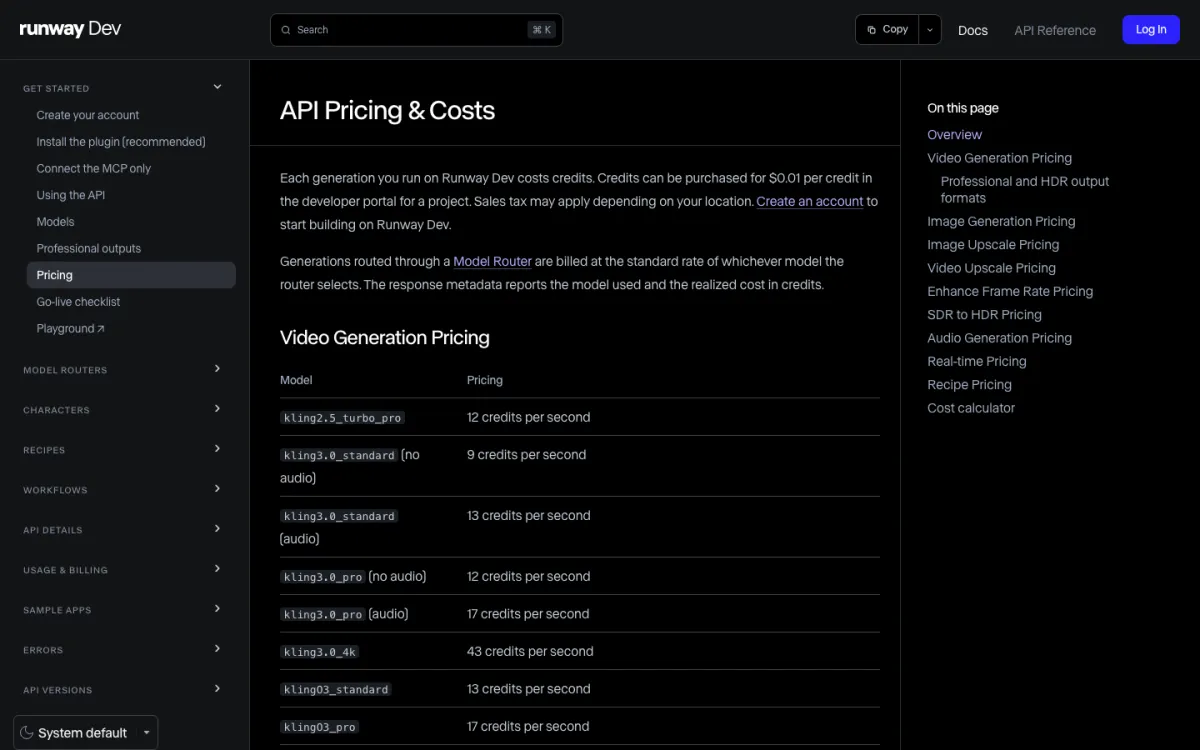
The Runway API is Runway's developer platform, with text-to-video, image-to-video, and video-to-video endpoints for its own Gen-4.5 and Aleph 2.0 models. It also resells third-party models through the same key.
- Pricing. Credits cost $0.01 each. Gen-4.5 is 12 credits a second, so $0.60 for 5 seconds. Gen-4 Turbo is 5 credits a second, and the Aleph 2.0 editing model is 28.
- Other models on the same key. Veo 3.1, Kling 4.0, Seedance 2.5, Hailuo, Wan, and Grok Imagine are all billed in Runway credits.
- Access. Self-serve, with a $10 minimum credit purchase. Keys are scoped to a project.
- Limits. Usage tiers rise automatically as you buy more credits. Tasks over your concurrency limit are queued as
THROTTLED, not rejected. - Changes to know. Runway retired
gen3a_turboandgen4_alephon July 30, 2026, per its API changelog. - Fits. Teams that want one vendor relationship, with Runway's editing models alongside Veo and Kling.
2. Google Veo 3.1: native audio up to 4K, at the top of the price range
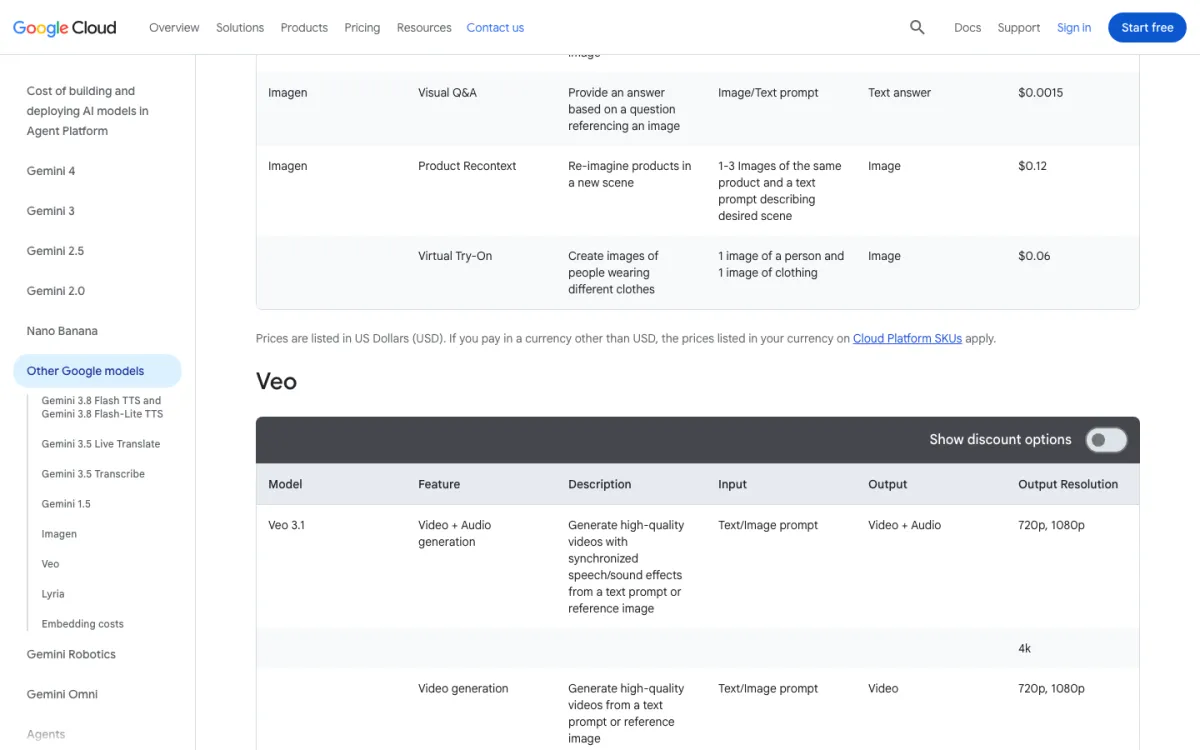
Veo 3.1 is Google's video model, now generally available on Google Cloud's Gemini Enterprise Agent Platform (formerly Vertex AI). It generates native audio and outputs up to 4K.
- Pricing. $0.40 a second with audio, $0.20 without, at 720p or 1080p. That's $2.00 for 5 seconds with audio. Veo 3.1 Fast is $0.10 to $0.30 a second, and Veo 3.1 Lite is $0.03 to $0.08.
- Inputs. Text-to-video, image-to-video, and clip extension.
- Access. A Google Cloud project with billing enabled.
- Fits. Products where output quality matters more than unit cost, or that can route drafts to Lite and finals to the full model.
3. Gemini Omni Flash: Google's video model on the Gemini API
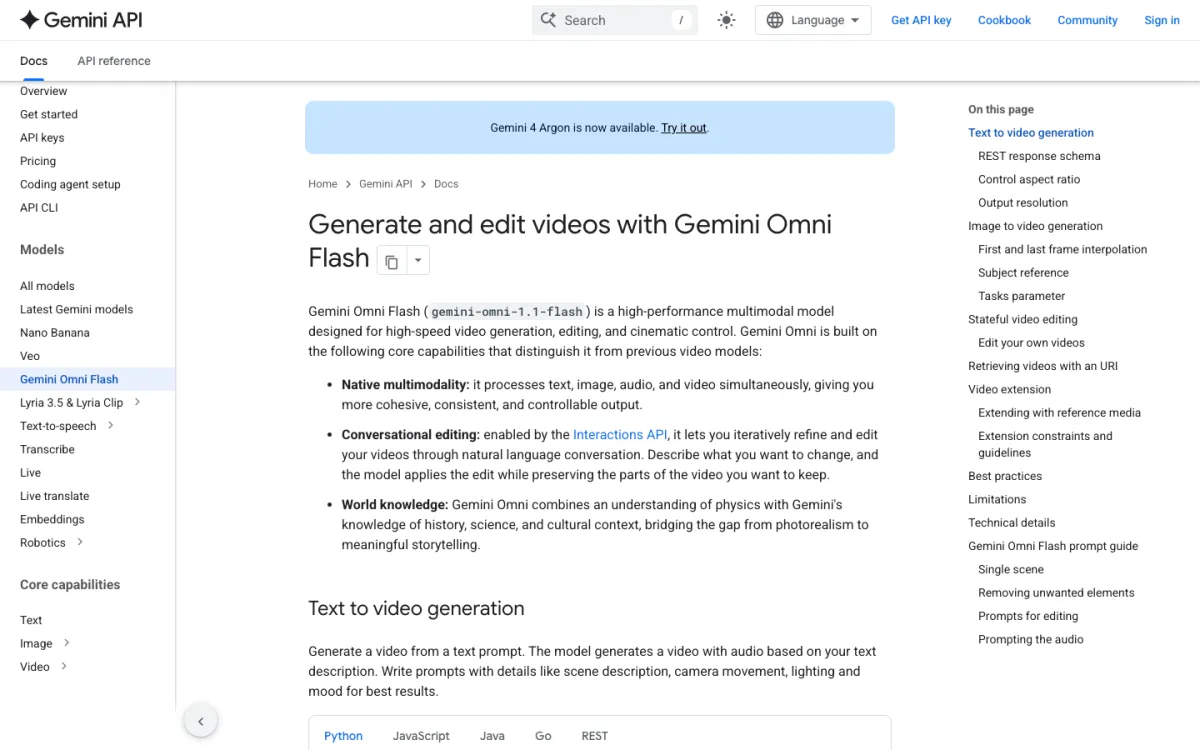
Gemini Omni Flash (gemini-omni-1.1-flash) is the video model Google now offers on the Gemini API, after the Veo previews were retired there. It generates, edits, and extends video, with audio by default.
- Pricing. $17.50 per million output video tokens, which works out to about $0.10 a second at 720p, or about $0.50 for 5 seconds. 360p is about $0.03 a second and 1080p about $0.15.
- Inputs. Text-to-video, image-to-video, and edit or extend an uploaded clip of up to 10 seconds, extending to 40 seconds total. Vertical 9:16 is supported.
- Access. Paid tier only, with a self-serve key. There's no free tier for Omni.
- Trade-offs. Every output carries a SynthID watermark, and editing uploaded video isn't available in the EEA, Switzerland, or the UK.
- Fits. Developers already on the Gemini API who want vertical video with audio at a mid-range price.
4. Kling API: long clips and native audio from Kling's own platform
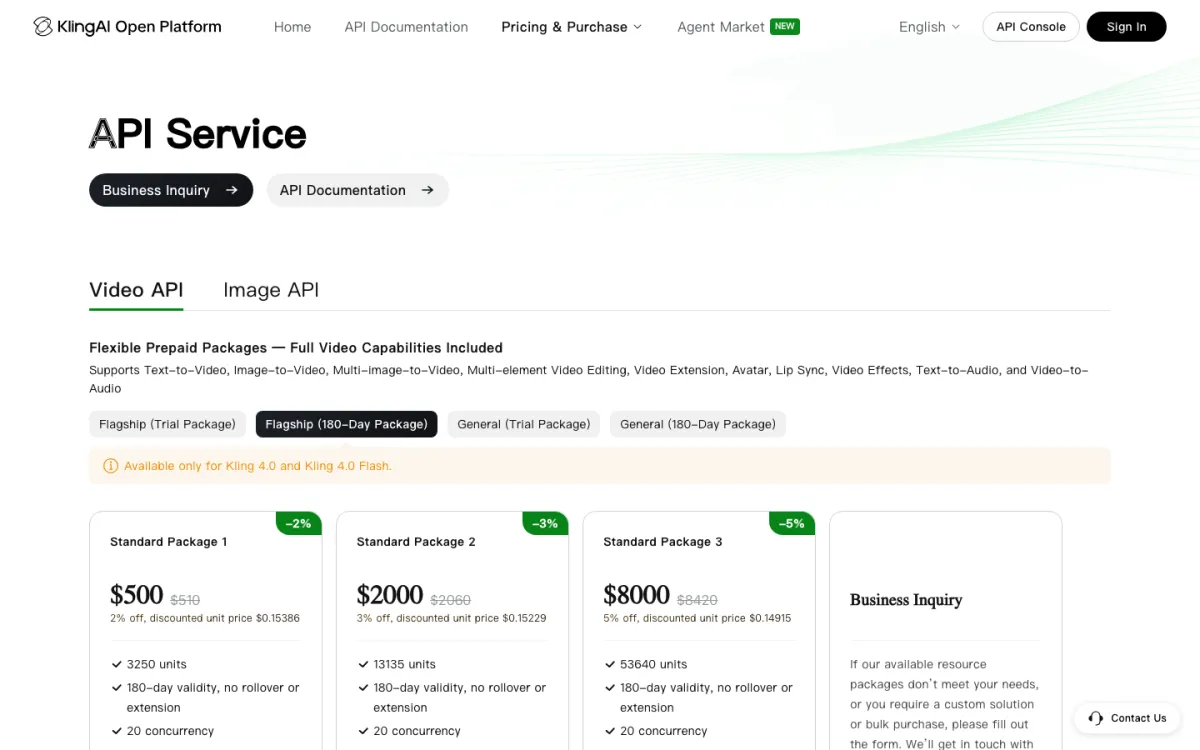
The Kling API is Kuaishou's developer platform for its Kling models, including Kling 4.0 and the Kling 3.0 family. It covers text-to-video, image-to-video, video-to-video, extension, lip sync, and native audio.
- Pricing. Prepaid units. Kling 4.0 uses 1 unit a second at 720p and 1.5 at 1080p, and a unit costs $0.141 to $0.154, so about $0.71 to $0.77 for 5 seconds. Kling 3.0 at 720p without audio works out to about $0.08 a second.
- Access. Self-serve trial packages start at $9. The larger 180-day packages start at $500 for Kling 4.0.
- Limits. Trial packages allow 5 concurrent tasks and 180-day packages allow 20. Unused units can't be rolled over or extended.
- Fits. Products that need clips up to 30 seconds and can commit to a prepaid package.
5. Seedance 2.5 on BytePlus ModelArk: ByteDance's model, billed by token
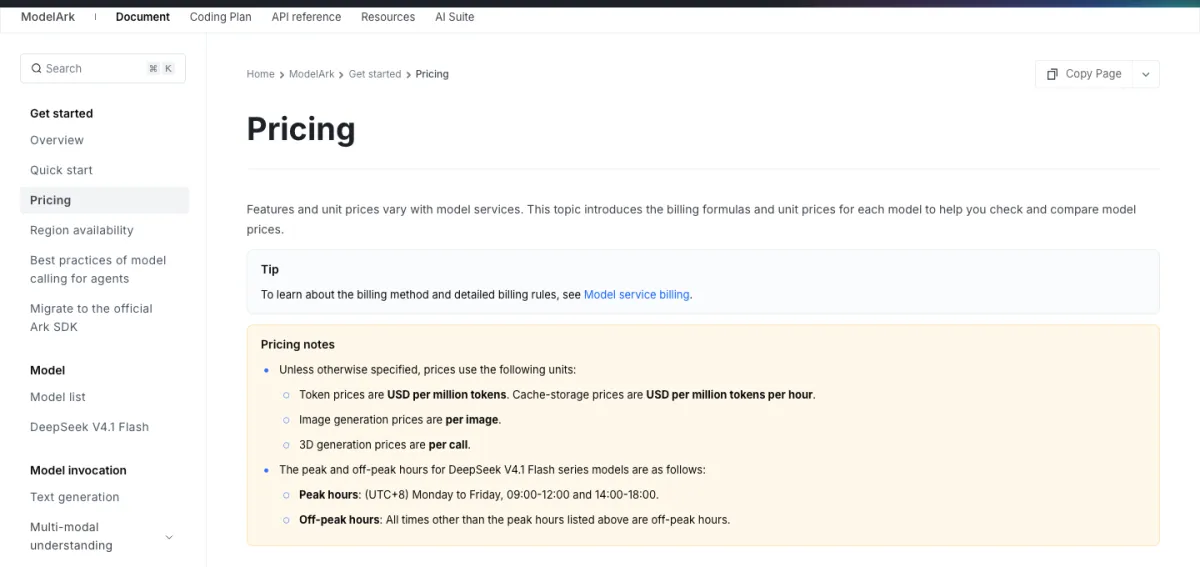
Seedance 2.5 is ByteDance's video model, sold to developers through BytePlus ModelArk. It takes text, first and last frames, and up to 50 reference assets (images, video, and audio) in one request.
- Pricing. Per million tokens, which BytePlus converts into examples: $1.16 for a 5-second 720p clip, $0.51 at 480p, and $2.84 at 1080p. Seedance 2.0 Mini costs $0.38 for 5 seconds at 720p.
- Billing. You pay only for successful generations.
- Access. Activation needs a balance over $30, a savings plan, or a resource pack. The service runs from Asia-Pacific and EU regions.
- Limits. 180 requests a minute and 3 concurrent tasks for individual accounts, and 600 and 10 for enterprise.
- Fits. Reference-heavy workflows, such as keeping a character or product consistent across shots.
6. MiniMax H3: low per-second cost with high request limits
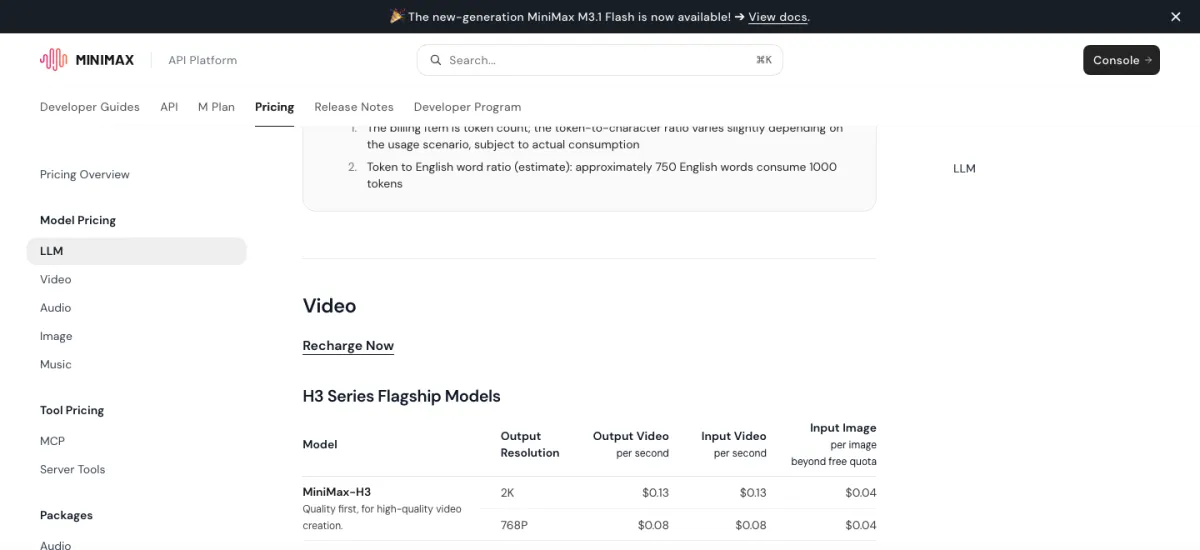
MiniMax H3 is the current video model on the MiniMax API, replacing the Hailuo 02 and 2.3 models, which are now listed as legacy. It supports text-to-video, first and last frames, and reference inputs of up to 9 images, 3 videos, and 3 audio clips.
- Pricing. $0.08 a second at 768p, so about $0.40 for 5 seconds, and $0.13 a second at 2K. H3 Lite runs $0.025 to $0.04 a second.
- Length. 4 to 15 seconds.
- Access. Pay as you go.
- Limits. 300 requests a minute and 30 tasks in flight for H3.
- Fits. High-volume products that need many short clips at a predictable unit cost.
7. Luma Ray3.2: fine control over frames, priced in credits
Luma Ray3.2 is Luma's video model, offered through the new Luma Agents API. The older Dream Machine API (ray-2) now points developers to it.
- Pricing. Credits per clip: 100 credits for 5 seconds at 720p, 400 at 1080p. The dollar value of a credit depends on your plan. Luma's API page puts Ray3.2 at $0.15 to $3.60 per video.
- Inputs. Text-to-video, image-to-video with start, end, and keyframes, editing, reframing, and extension. HDR and EXR export are available, at double the price for HDR.
- Length. 5 or 10 seconds, at 540p, 720p, or 1080p.
- Access. Pay as you go, with no minimum.
- Fits. Products that need keyframe control or HDR output for post-production.
8. Higgsfield API: 50+ models behind one prepaid balance
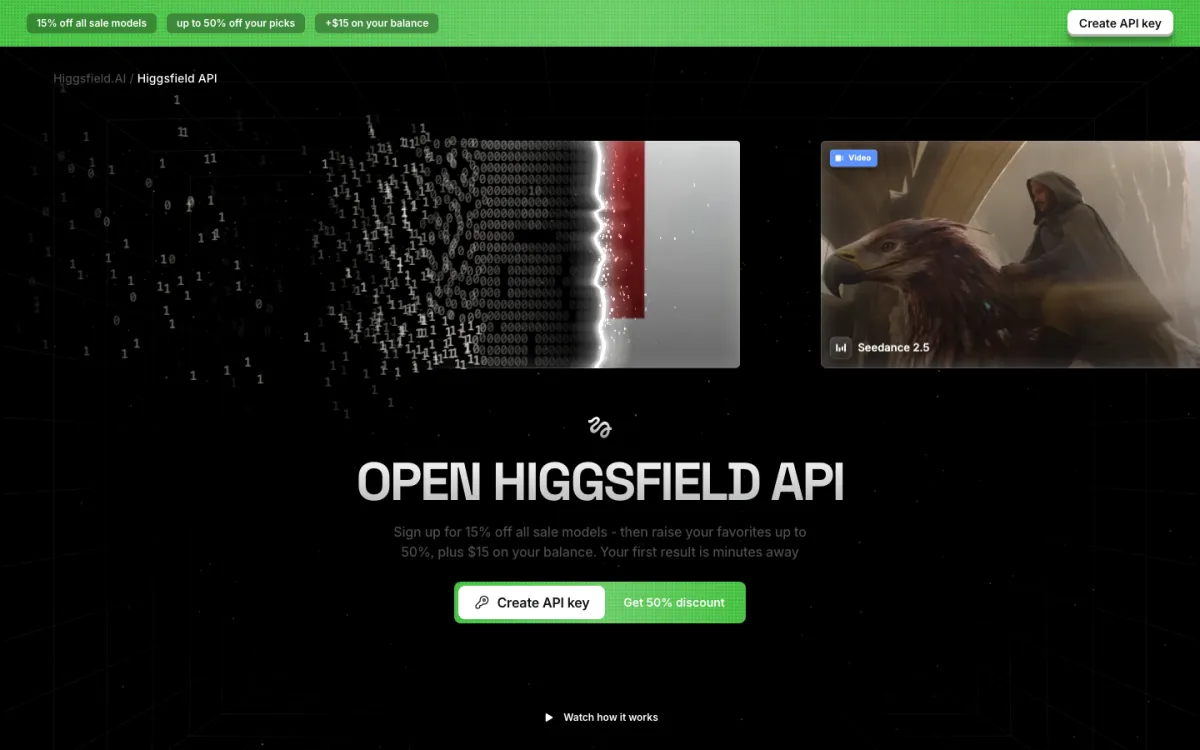
The Higgsfield API gives you pay-per-generation access to the models in Higgsfield's catalog, including Kling, Seedance, Veo, Wan, and Higgsfield's own models. It launched in September 2026.
- Pricing. Per generation, from a prepaid USD balance. Kling 3.0 is $0.112 a second ($0.56 for 5 seconds) and Kling 2.6 is $0.07. Rates for each model are listed in its API catalog.
- Billing. Failed generations are refunded, and the balance expires after one year.
- Access. Self-serve, with a $5 minimum top-up. Higgsfield's subscription plans don't include API access.
- Limits. New keys get 20 concurrent requests, which rises with top-up volume.
- Fits. Teams that want to switch models without signing up with each lab, and want failed generations refunded.
9. fal: per-second pricing across hundreds of models
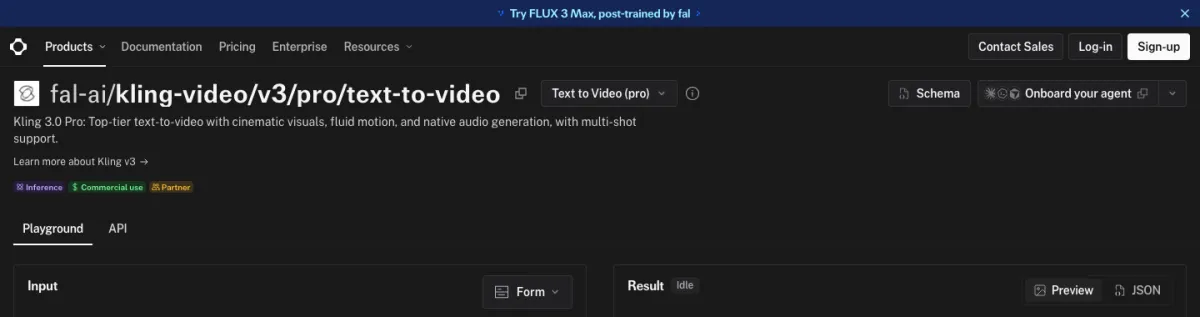
fal is an inference platform that hosts many video models behind one API, billed from prepaid credits.
- Pricing. Per output, usually per second. Kling v3 Pro text-to-video is $0.112 a second without audio and $0.168 with it, so $0.56 to $0.84 for 5 seconds.
- Billing. fal doesn't charge for server errors or time in the queue.
- Live prices. Each model page has an
llms.txtwith its current price, which an agent or a build script can read. - Fits. Developers who want to try several models quickly with one integration.
10. Replicate: official model endpoints, priced per output second
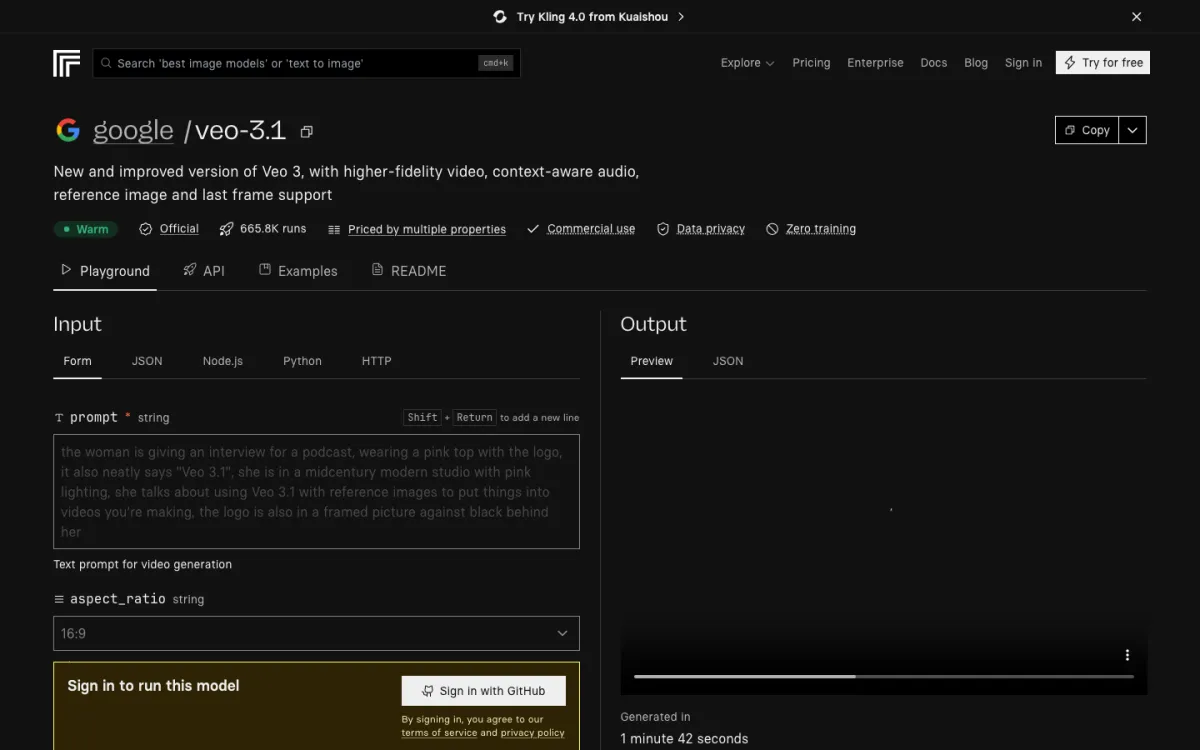
Replicate runs official endpoints for many of the models above, including Veo 3.1, Kling 4.0, Seedance 2.0, Gen-4.5, and Hailuo, plus community models.
- Pricing. Official models are priced per output second. Veo 3.1 is $0.40 a second with audio and $0.20 without, the same rate as Google Cloud. Older community models are billed by GPU time.
- Access. Self-serve.
- Fits. Teams that want the official models from several labs on one billing account, at the labs' own per-second rates where Replicate matches them.
Should I use an aggregator or go direct?
Go direct to a model provider when one model will carry most of your volume, because direct pricing is usually the floor and you get the newest features first. Use an aggregator (Higgsfield, fal, Replicate, or Runway's third-party catalog) when you expect to switch models as new ones ship.
- Price. Rates through aggregators vary. Replicate charges the same as Google Cloud for Veo 3.1, while some aggregators mark models up.
- Billing behavior. Aggregators often refund failures that the provider itself would bill, or the other way round. Check each one.
- Lock-in. One integration that can call ten models is the best hedge in a market where the "best" model changes every few months.
How do I publish AI-generated videos to TikTok, Instagram, and YouTube?
Every API on this list ends with a video file. Getting that file onto your users' TikTok, Instagram, and YouTube accounts is a separate integration with each platform's posting API, and each platform reviews video publishing separately:
- TikTok. The Content Posting API needs app review, then a separate audit before posts can be public. Until then, every post is private.
- Instagram. Reels publish through the Instagram Graph API, which needs Meta app review for the publishing permission.
- YouTube. Uploads through the YouTube Data API need Google's OAuth verification, and an audit before uploads can be public.
This is the step our own product handles. Adeli, the company behind this blog, is a social media posting API that sits after the video model. Adeli publishes the video your product just generated to TikTok, Instagram Reels, YouTube, Facebook, and X in one request, and returns a status for each network. Adeli has already been through each platform's review, including YouTube's API Services audit, so your users' uploads aren't locked to private. See how this works for AI content generation tools.
Which one should you pick?
- Lowest cost per clip: MiniMax H3 or Gemini Omni Flash. For drafts, Veo 3.1 Lite or Seedance 2.0 Mini.
- Native audio up to 4K: Veo 3.1 on Google Cloud.
- Long clips (up to 30 seconds): Kling 4.0 or Seedance 2.5.
- Reference-heavy consistency: Seedance 2.5.
- Keyframe control and HDR: Luma Ray3.2.
- One key for many models: the Runway API, the Higgsfield API, fal, or Replicate.
Whichever you pick, put the model behind your own interface so you can swap it out. Several models on this list didn't exist a year ago, and two that topped similar lists are already gone.